











Showing posts with label Indian Sweets. Show all posts

Sarkkarai Pongal – Indian Rice Pudding

Last week, we celebrated ‘Makara Sankaranthi’ or Pongal, the harvest festival of Tamilnadu. It also denotes the end of ‘Maargazhi’ and birth of ‘Thai’, one of the most auspicious months in the Tamil lunar calendar. This day also marks the commencement of Uttarayanam (mid Jan - mid Jul), the northern ascent of the Sun. The days are warmer and longer from now on. Pongal is celebrated for three days as Bhogi, Pongal, and Kaanum Pongal/Maattu Pongal.

Bhogi is like spring cleaning. People discard old things and buy new ones. As this festival falls soon after the harvest season, the farmers could afford to stock their homes now. The houses are cleaned, white washed, and decorated with kolam. The family congregates to celebrate together. When there are people, there is always good food, particularly sweets. Poli is the star of the day, accompanied by crunchy lentil fritters (called aama vadai).

Pressure-cooked rice and dal

The second day, Sankaranthi, is celebrated in honor of the Sun God. Pongal is the name of the festival, as well as the sweet that is prepared this day. Heavy bottomed bronze pots are cleaned, seasoned with rice flour on the outside (for easy cleanup), and adorned with ginger and turmeric plants. Newly harvested rice, is cooked along with milk and jaggery, and offered to the Sun God. Along with this, an array of vegetables, rasam, sambar and vadai (with no onion) are also prepared. But what attracts the kids most is the sugarcane. They are right in season and are part of the offerings. They are nature’s stick candy, convenient to carry and a pleasure to eat. The bite into the delicious flesh and the rush of the sugarcane juice in the insides of the mouth is an experience everybody should have, at least once in their lifetimes.

On the third day, the cows are adorned and worshiped, hence the name maattu pongal (which literally translates to cow pongal). On this day, the sisters also pray for the wellness of their brothers by offering the previous day's pongal to the birds. Also, leftovers from the previous cooking, namely the different vegetables and sambar are cooked in a single pot making Ericha Kozhambu, a hodgepodge that I absolutely love. On this day, the food is fairly simple in my house after all the feasting in the past two days. Curd rice with ericha kozhmabu takes care of all the leftovers. And there is always sugarcane to indulge in.

Pongal - Sweet and Savoury

It is so much fun being around the family during festivities like such. It is imperative that I miss being home on occasions like these. But I make a point to celebrate (read as prepare the customary treats), if at all in a simple manner. Even during his bachelorhood, G celebrated pongal by making the savory and the sweet version along with gosthu. I have heard tales where his friends used to drive 6 hours to get to eat his killer pongal. I find this more convenient, than preparing rice and vegetables, in addition to sakkarai pongal, for just the two of us. Also, dessert gets to be half the meal. What is there to complain about?

Today I am giving you two almost similar recipes for sarkkarai pongal. One, if you are preparing just the sweet kind; the other for making both sweet and savory versions together. They make for an excellent weekend brunch.

But before going to the recipe, here is a brief explanation of the word pongal. Pongal is grammatically a verb, meaning 'to overflow'. The festival is to wish everyone an overflowing abundance of health, wealth and happiness in their lives. To mark this, sweet pongal is let to overflow in the bronze pot its cooking. The family members cheer 'Pongalo pongal', a traditional greeting, to one another. You can always find me in my mom's kitchen screaming 'pongalo pongal' at the top of my voice. Others, hmmm.. lets say they don't usually bother :D

Savoury version = Ven pongal = White pongal
Sweet version = Sarkkarai pongal = Jaggery pongal

Lightly roasted moong dal

Sweet and Savoury Pongal
(serves 3-4)

Ingredients for both

Raw rice – 1½ cups
Moong dal – ½ cup
Milk – 1½ cups, skim or fat free milk
Water – 7½ cups
Cashew nuts – 20
Ghee – 2 tbsp (more if you like)

For ven pongal

Whole black pepper – 1 tbsp
Whole cumin seeds – 1 tbsp
Ginger – 1-2 tbsp, finely chopped
Curry leaves – few
Salt

For sarkkarai pongal

Jaggery – ¾, powdered or grated (per your taste)
Sugar – 2 tbsp
Raisins – 2 tbsp
Ground cardamom – 1 tsp
Edible camphor – a teeny bit

Method

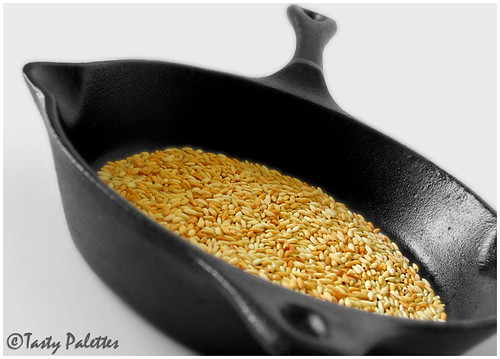
Roast moong dal until light golden brown. Let cool, and wash dal along with rice in two changes of water. If cooking on stove top, combine milk and water with rice and dal in a wide, deep vessel, and cook until mushy. The mixture needs to be stirred now and then, to avoid sticking to the bottom. This traditional method of cooking takes about 25 minutes, but is delicious. If using a pressure cooker, combine milk and water with rice and dal directly into the cooker and cook for 6 whistles. Open the cooker only after the pressure has died down. When cooked, the mixture should be very soft, that it shouldn’t resist the spatula at all.

Jaggery syrup, boiling away

Meanwhile, dissolve jaggery in ¼ cup of water. Take off the heat and filter the syrup for any impurities. Return the jaggery solution back to the heat, add sugar and allow it come to a brisk boil. After 5 minutes, mix 2/5th (pardon the numbers, it is a little more than 1/3rd) of the cooked rice-dal mixture and combine thoroughly.

In a small skillet, heat a tbsp of ghee, roast 10 cashews and raisins, until the nuts are golden and the raisins are plump. Add to the sweet pongal, along with cardamom, and edible camphor.

Return the skillet to heat, add another tbsp of ghee, roast the remaining cashews, pepper, cumin, ginger and curry leaves. Add this mixture to the remaining 3/5th rice-dal mixture in the cooker, along with salt. Mix well and serve immediately.

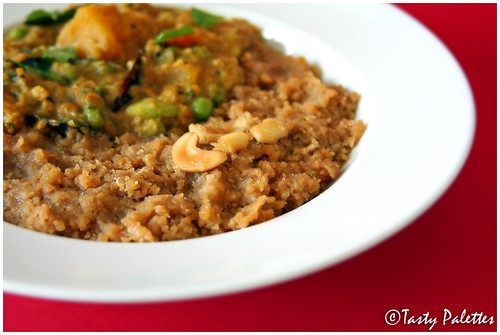
Ven pongal doused with melted ghee

Sarkkarai Pongal
(serves 3-4)

If you are making just the sweet pongal for dessert, cook rice-dal mixture with more milk. Also, instead of making the sugar syrup separately, the sweeteners are added directly to the rice. But for that, the recipe remains the same.

Ingredients

Raw rice – 2/3 cup
Moong dal – 2 tbsp
Chana dal – 1 tbsp (optional)
Milk – 2 cups, skim or fat free
Water – 2 cups
Jaggery – 1-1½ cups, powdered or grated (per your taste)
Sugar – 1 tbsp
Ghee – 1 tbsp
Cashew – 10-15
Raisins – 2 tbsp
Ground cardamom – 1 tsp
Edible camphor – a teeny bit

Method

Roast the dals until lightly golden. Cool, and rinse along with rice. Transfer to the pressure cooker with milk and water, and cook for 6 whistles. Or cook on stovetop as mentioned above. When the pressure has subsided, remove the lid and add jaggery and sugar and mix until everything is combined well. Continue cooking this mixture for about 10 minutes on low flame. If the mixture tightens up too much, add small amounts of boiling water to maintain the consistency. The jaggery should have melted completely and should not smell raw. When good aroma wafts from the pongal, switch off the stove.

In another small pan, melt ghee, roast cashews and raisins. Add this to the prepared pongal, along with cardamom and edible camphor. Whether you serve it warm, cold or at room temperature, sarkkarai pongal tastes divine.

Few points

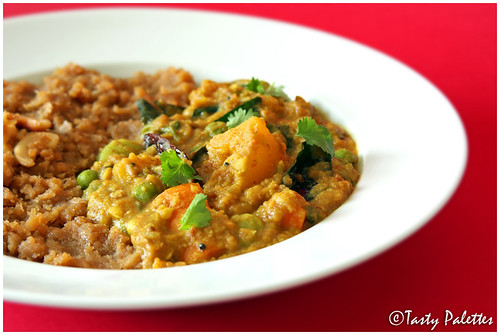
  • You can enjoy the sweet and savoury pongal with ezhu kari or ericha kozhambu or gosthu to cut though the sweetness.
  • The small amount of sugar added with jaggery is for added umph. Jaggery has a mellow sweetness that appears in the background. Adding small amount of sugar hits the palate immediately.
  • Different brands of jaggery have different levels of sweetness. So the amount given in this recipe is only approximate, and should be adjusted accordingly.
  • You can mix few tsps of sugar in the end, if you desire sweeter pongal.
  • As with any pongal, this should be served immediately. For reheating purposes, sprinkle boiling water to bring back to consistency.

While I wrote about ven pongal, I described how it used to be served at temples - in cups made from dried leaves (banana or palm). The taste of hot pongal on dry leaf is beyond description. If you had tasted dishes that had been wrapped and steamed in leaves (like tamales or panai olai kozhukattai), you will know what I am talking about. The leaves add an amazing flavor to the dishes which is hard to recreate otherwise. I think this is also one of the reasons that pongal served at temples tastes different than that made at home.

I managed to acquire a small stack of thonnai – the non-toxic, bio degradable, sustainable, all-natural leaf-cups from India. I was very thrilled to recreate the magic one more time.

Sarkkarai pongal, ven pongal served in thonnai. The trio is complete with ezhukari kuzhambhu(not shown)

I know its late, but my belated Sankaranthi wishes to all of you. You bloggers know it takes more time to write about food than cooking it.

Thiruvadhirai Kali and Ezhukari kozhambu

If you are not able to read what the title says, don’t bother. Kali is rice cooked with jaggery and Ezhukari kozhambu, which is sambar with 7 vegetables. This is a classic combination made for the festival of Thiruvadhirai. Thiru + Adhirai is Thiruvadhirai, which is the birthday of Lord Shiva. Adhirai is, obviously his birth star, and hence the day is called Arudhra Dharisanam. I remember my Grandma pointing this star in the Northwest skies. It sparkles like a ruby, in bright red.

Facts apart, I love this festival, food being the primary reason. I am not a big fan of sweets, but ok with anything mildly sweet. Kali being rice cooked with jaggery is served with a savoury sambar. The sweet and spicy combination is like yin-yang for the taste buds, and I absolutely love it.

Thiruvathirai Kali

This kali is also made with a mixture of rice and dal. Since the kozhambu has dal in it, I don’t find it necessary. The measurements given below serves two people.

Ingredients

Raw rice – ½ cup
Water – 1¼ cup
Jaggery – 1 cup, grated
Coconut – ¼ cup, grated
Ground elaichi or cardamom – ½ tsp
Cashews – 10
Ghee – 2 tsp

Method

Roasted rice

Roast rice until red. Wash rice and grind into a coarse meal, like rava. Roast cashews in a tsp of ghee until golden brown. Set aside.

In a pan, heat water and dissolve jaggery. Once dissolved, add coconut, ground rice and a tsp of ghee. Mix well and transfer to another vessel. Pressure cook this for 2 whistles. When done, cool and fluff. Mix roasted cashew nuts and ground elaichi. Serve with kozhambu.

Thiruvadhirai Kali

Ezhukari Kozhambu

Ezhukari kozhambu is supposed to be made with 7 vegetables, but you can add as many or as less as you want. This is more like sambar, but with lots of vegetables. In olden days, after the festivities are over, the ladies would mix left-over vegetables and sambar that was made earlier in the day. The resultant gravy is a delicious mixture of sweet root vegetables(plenty during the season) and spicy sambar.

My family calls this “Ericha Kuzhambu’, which loosely translates to sambar that is heated over and over again. This kuzhambu tastes better as it grows older, like wine. Well not that old, but 2 or 3 days. When this gravy is heated again and again, the vegetables almost melt mixing with spices. What is left is a divine concoction that goes well with almost everything, dosa and curd rice, in particular. If you are worried about nutrition depletion due to over heating, please look away. This is beyond all of that.

Ingredients

Mixed vegetables – 3 cups, cubed
Tamarind paste – 2 tbsp
Turmeric powder – 1 tsp
Asafoetida – a pinch
Toor dal – ¼ cup
Mustard seeds – 1 tsp
Curry leaves – 10
Cilantro – few springs, chopped
Oil – 1 tbsp
Salt

Spice mixture

Coriander seeds – 3 tbsp
Chana dal – 1 tbsp
Fenugreek seeds – ¼ tsp
Red chillies - 8

Roast all of the above in a tsp of oil and grind to a fine paste.

Method

Vegetables that can be used are Red pumpkin, White pumpkin, eggplant, sweet potato, potato, lima beans, peas, plantain, yam, elephant yam, colocasia, green beans, runner beans, cluster beans, chayote squash(chow chow), green chillies, snake gourd.

Pressure cook dal with a pinch of turmeric powder. In a big pot, mix vegetables, tamarind paste, turmeric powder, salt with enough water and boil until the vegetables have cooked and tamarind doesn’t smell raw. Combine the ground paste and cooked dal and bring it to a boil. Allow this to boil on a low flame for 5 minutes. Adjust seasoning as required. In a small pan, heat oil, splutter mustard seeds and throw some curry leaves. Add this to sambar, along with cilantro and asafoetida. Serve with kali.

Ezhukari Kozhambu

This is my second entry for RCI – Tamil Festivals, hosted by Viji.

Coconut And Jaggery Poli

Poli is a traditional Indian dessert served during auspicious days or festivals. It resembles a roti or paratha, but with a sweet filling, called pooranam. Different versions of poli can be seen prepared across various different cuisines in India. The various fillings are coconut + sugar, cooked chana dal + jaggery, semolina + jaggery and even squash + jaggery. Of all these variations, coconut and jaggery is our favourite.

Typically poli, in Tamil Nadu, is prepared on Bhogi (day before Pongal) and Avani Avittam (Changing of the Sacred Thread/Poonal). This is one of the first recipes that I learnt watching my mother do. It was very convenient for her, I should say. Because, preparing poli single-handedly, for the whole family, is an enormous task, among other things.

The best thing about poli is, it stays good for 2 days without refrigeration. During festival days, amidst the chaos, I don’t get to appreciate all the delicacies prepared. So, when the festivities are over, I like to have my poli, slightly warmed, drizzled with a drop of ghee, over a nice hot cup of coffee :).

Ingredients

Dough

Maida or All purpose flour – 3 cups
Turmeric powder – 1 tsp
Salt – ½ tsp
Oil (preferably sesame oil) – ½ cup

Filling or Pooranam

Coconut – 1½ cups, finely grated
Grated jaggery – 2 cups
Elaichi or cardamom, powdered – 2 tsp

Aluminum foil or banana leaf or butter paper – 2 squares

Method

Prepare dough by mixing maida, turmeric powder and salt to a chapati dough consistency. Cover the surface of the dough with a thin film of oil and allow the dough to rest for at least 2 hours. After resting, the dough will be elastic. Don’t be alarmed with ¼ cup of oil. The dough needs fat to remain moist and elastic. Also, you will use the same oil on the dough, to spread the poli.

Dissolve jaggery in ¼ cup of water and boil until it is syrupy. Add coconut and cook until everything comes together. Switch off the flame and mix in the elaichi powder. Allow this filling to cool and roll into balls of 1½ inch in diameter.

Coconut Poli

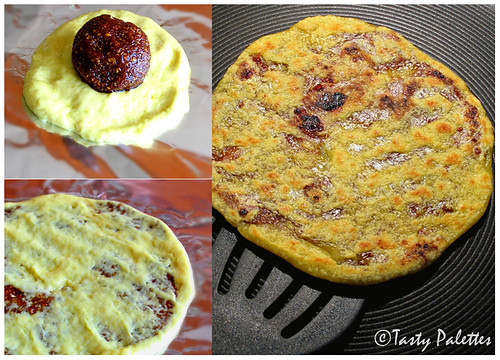
Heat a flat pan(tawa) over medium heat. Apply oil over the foil or banana leaf, and take a small ball of dough. Apply oil from the dough on your fingers and flatten the dough to a small circle. Place one ball of the filling or pooranam. Close the pooranam by pulling the dough on all sides. Cover well, and place the seam side down. Slowly, with your fingers, flatten the poli as thin as you can. The dough, now being elastic, should cover the whole poli, without tearing. This is attained through practice.

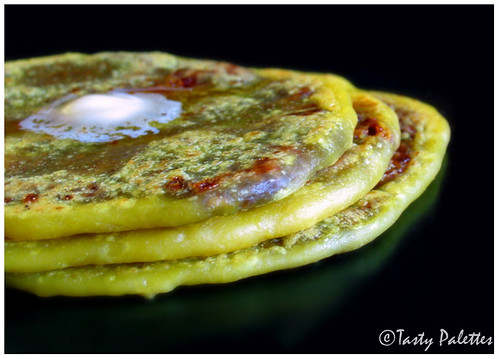
Now invert the foil or banana leaf with the poli over the hot tawa, poli side down. After 30-45 seconds, slowly peel the foil leaving the poli on the pan. Meanwhile use the other foil to prepare the next poli. The fat in the dough is enough to cook the poli. Cook until brown spots appear on both the sides. Serve warm with ghee or a pat of butter, if desired. Yields 15 medium sized polis.

Coconut Poli

Viji, this is my contribution for RCI–Tamil Festivals. RCI is Lakshmi’s conception.

1-in-3 Jackfruit

IMG0196

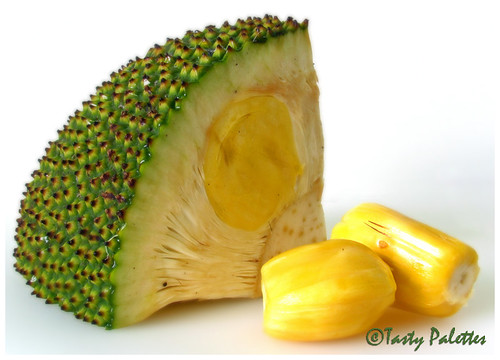
Jackfruit – Aptly called as ‘Gentle Giant’ by Indira. You should be aware that I was on a jackfruit hunt sometime back. Yes, I did make that dreadful trip to the Asian store. Though I couldn’t find incense sticks in the nearby aisles, I went on with the search. All for this month’s JFI hosted by Jugalbandi. I was being modest and searched the freezer section for frozen jackfruit pieces. Nope, no luck. Alright, no JFI entry from me this month :-(.

Suddenly a tap from my husband. I find him pointing his finger in one direction. To my surprise, there it is – A whole jackfruit. I was enthralled by what I was looking at for two reasons. One, I will be able to participate in this month’s JFI. Two, its been a long time since I had jackfruit. Armed with the 15-pound fruit and few cans of green jackfruit, I came home with a triumphant smile. I can now post not 1, but 1-in-3 on jackfruit. Gini, I hope this answers your question :-).

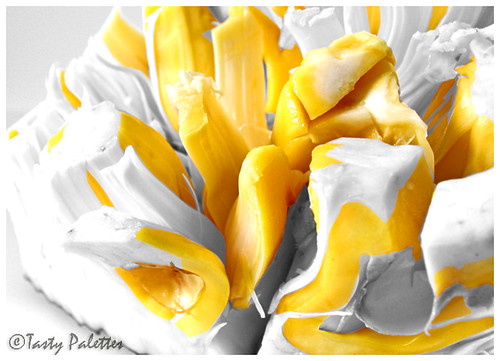
I didn’t know that there were two types of jackfruit until I read Injipennu’s post. Luckily, the fruit I bought was the varikkachakka variety, it was sweet as honey. Working on the fruit was fun too (Of course, with gloves on). The whole house was filled with the sweet smell of jackfruit.

IMG0210024

I am not going to give you the specifics about jackfruit, its all here. I want to thank Jai & Bee (not only for the incense sticks idea) for instigating me to go look for Jackfruit. If not for you I wouldn’t have had even stepped in that direction. Thanks guys!

My entry for this month’s JFI is Jackfruit Halwa. This recipe is from my cookbook encyclopedia Samaithu Paar by Meenakshi Ammal. This halwa is not the typical chewy type, but a slightly crunchy one due to the sugar syrup, yet tasty.

Ingredients

Jackfruit – 1 cup, cubed into small pieces
Sugar – 1 ½ cups
Cashew nuts – ¼ cup, halved
Ghee – 2 tbsp
Saffron
Elaichi or Cardamom – ½ tsp, powdered
Edible camphor – A mustard seed size

Method

Mix sugar and ¼ cup of water and make a sugar syrup until it reaches one-string consistency. Add the jackfruit pieces and stir until the fruit gets cooked and blends with the sugar syrup. The mixture should be thick if you want to make pieces.

Roast cashew nuts in a tsp of ghee until golden brown. Add this to the jackfruit mixture along with the rest of the ghee and saffron. Take the halwa off the stove and mix elaichi and camphor.

Grease a plate with ghee and pour the halwa onto it. Cut into pieces while it is still warm.

IMG0229035

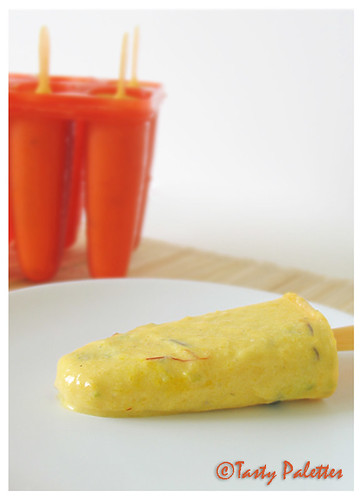
Mango Kulfi

“Kulfeeeeee”, the kulfi man at 10 in the night.

“Appa, appa, kulfi pa, please”- Me

“No no, you will fall sick. Look at the time, its 10” – Dad

But the kulfi man always comes at 10, “No pa, just once, pleaaseeee” - Me

Appa looking at Amma.

‘God! Make Amma give “that’s ok” nod’ – Me

“OK! But this is the last time” – Amma

“Sure Ma!” – Me, certain that this will not be the last time

I still remember the gleam in my eyes when I watched the kulfi man slice the kulfi and handed ‘em to me in a banana leaf. I knew I was sure to fall sick after eating ice cream at 10 in the night, but the temptation was inescapable. The texture, taste and scent – it was appealing to all my senses. Its been years since I had kulfi, and I no longer remember the exact taste and texture to recreate the recipe. But this recipe tastes as good as the one I had in my childhood days (as far as I could remember) and is easy as a snap.

Ingredients

Mango – 1
Condensed milk – 1 can
Elaichi – ¼ tsp, powdered
Saffron – few strands
Pistachios – ¼ cup, chopped coarsely

Method

Puree the mango. If using canned mango, reserve the juice. Mix puree, elaichi, saffron and pistachios. Add only half of the condensed milk. Taste the mixture and continue adding milk (and the juice, if using canned mango) until the desired sweetness is reached. The mixture should taste sweeter than you prefer as it will loose some of the sweetness after its frozen. Pour into popsicle/kulfi molds and freeze overnight.

IMG0199

This is my entry for Barbara’s A Taste Of Yellow. Thanks Jai and Bee for letting me know about this event. This is also my entry for A Fruit A Month – Mango by Deepa of Recipes and More.

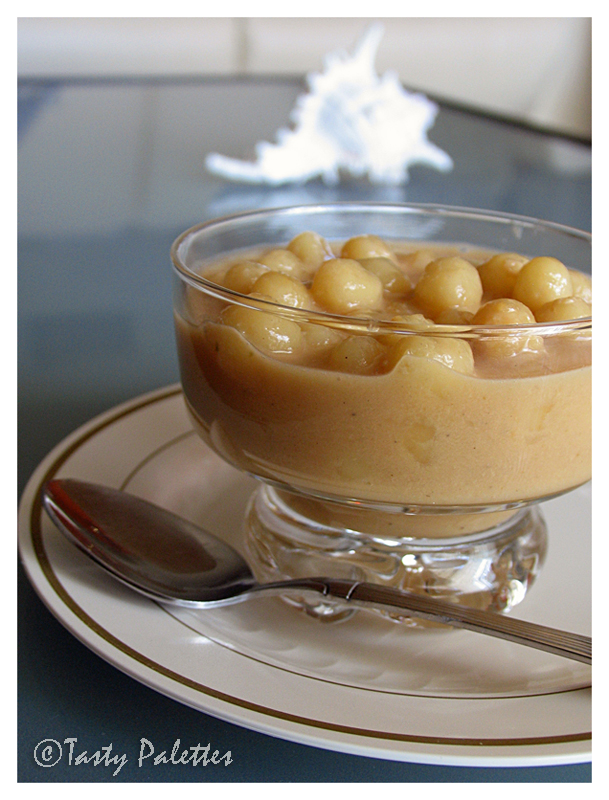
Paal Kozhukkattai (Rice balls in Jaggery)

IMG0024

My first recipe is one of my favourite Indian sweets. I have fond memories of this dish. Every year during summer holidays, in my Granny’s house, my mom and her sisters would sit and make this the whole afternoon, while we cousins impatiently wait. It never felt tiresome making those tiny rice balls, sitting with the ‘Ladies’ of the house and hearing gossips, leg-pulling and other nonsensical chit-chat. It is always fun to cook with somebody around, than by yourself, Don’t you agree?

The traditional method for this recipe is tricky, while this, learnt from my MIL is an easy and fool-proof one.

Ingredients

Raw rice – 1 cup
Milk – 1 cup
Coconut milk – 1 cup
Jaggery – 1 cup
Salt – 1 pinch
Oil – 1 tsp

Method

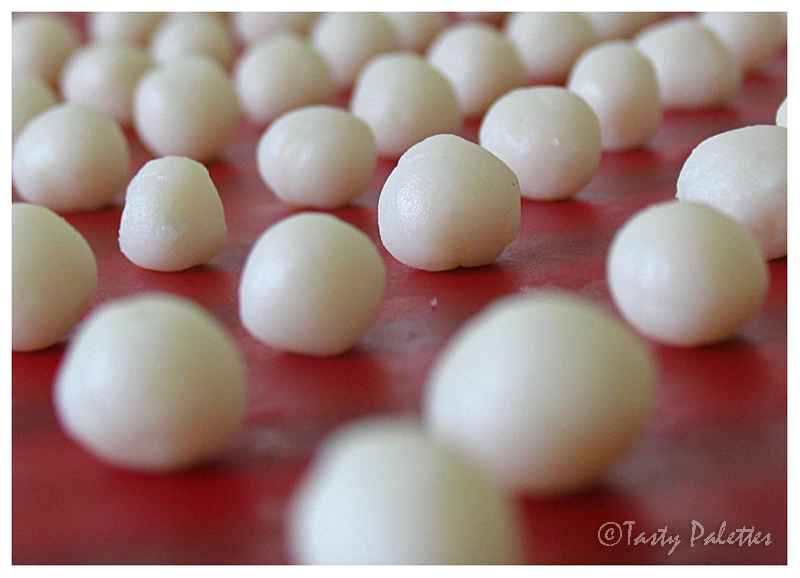
Soak rice overnight and grind it to a smooth batter (dosa or pancake batter consistency). Boil a cup of water with a pinch of salt and a tsp of oil. Lower the flame and add the rice batter to this and keep stirring until it becomes well cooked. The mixture will turn from bright white to dull white colour. After the mixture cools down, knead it well and make pea-sized balls.


IMG0021

This recipe can be prepared to this stage and refrigerated for up to 2 days.

When ready, mix milk with ½ cup of water and bring it to boil. Cook the rice balls made previously, in batches, by adding them to the milk + water mixture. The rice balls will float after they have been cooked. After all the rice balls have been cooked, set them aside. Add jaggery to the left-over milk + water mixture and allow it to dissolve.

Add the cooked rice balls back to the jaggery-milk mixture, and allow to boil for 5 minutes in low flame. Add the coconut milk and heat through. Do not boil after the coconut milk has been added. Finally, add ground elaichi.