












Granola, Versatility By The Spoonfuls
This post has been lying as a draft for about 3 weeks now. Hesitancy of where to start and what to write has taken upon me. Its been a while since I have been here; quite evident as Addie is already 7 months old. Its only the blog end that has been quiet; all other facets of our lives are anything but. Needless to say, our lives are revolving around Addie. Our house is filled with her squeaks and babbles, and most of all her generous, toothless smiles. I am enjoying every single moment of my motherhood. They say time flies faster with kids. That makes me greedy and want to savor every minute of it.

Nothing fancy is dished out from my kitchen these days. I only get little time to prepare a meal, let alone plate and photograph it. I thought I would be upset for not blogging as regularly as I would like to. Well, I even thought I couldn’t stand a messy house for a day. But this new me is quite different. My days are dedicated to our little one. The messy house can wait; and so can the piles of laundry and the sink full of dishes.
Slowly, I am learning to make time for myself. Now, I still don’t get to read a book with a hot cuppa chai; or get to take a long shower without eyeing at the baby monitor. But it’s a start. And it is here, in my virtual kitchen, that I want to begin. So bear with me while I adjust to this new life of mine. I will be back with old rigor in no time.

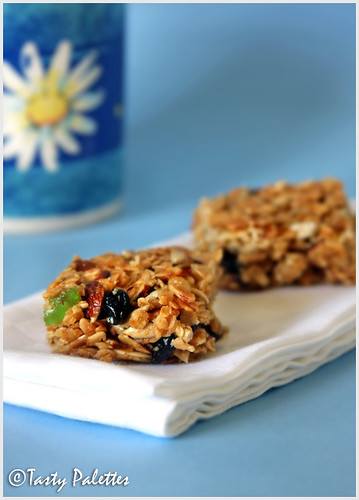
For now, I am going to leave you with my favourite granola recipe. It is adapted from Alton Brown’s recipe. It’s been a favourite even though I have been making this for over 3 years now. The key is to add something different each time. About a cup of variant that I have listed below (or one of your favourites), and different selections of dried fruit keeps this recipe anew. A good way to start a day and take-on the adventures that it holds.
GranolaIngredientsRolled oats – 4 cups1 cup of one or more of the following variants
- Rolled triticale
- Hemp seeds
- Wheat germ
- Pumpkin seeds
- Flax seeds
- or use another cup of rolled oats
Or
Sugar – ¼ cup and molasses – 2 tbsp
Sliced almonds – 2 cups (or use your favourite nut)
Maple syrup/ agave nectar/ honey – 1/3 cup
Canola oil – ¼ cup
Salt – 1 tsp
Dried fruit – 2 cups (cranberries, raisins, berries, apples, figs etc)

Maple syrup/ agave nectar/ honey – 1/3 cup
Canola oil – ¼ cup
Salt – 1 tsp
Dried fruit – 2 cups (cranberries, raisins, berries, apples, figs etc)
Clockwise from top: Dried fruits (figs, blackberries, cranberries, gojiberries), sliced almonds, rolled triticale, rolled oats
MethodPreheat oven to 300F. Mix oats, the variant, almonds, sugar and salt thoroughly in a large bowl. In another bowl mix maple syrup, oil and molasses, if using. Combine wet and dry mixtures and spread on a sheet pan. Bake for 45-50 minutes, stirring every 15 minutes. Oats and the nuts should be golden and toasted. Mix the dried fruits evenly and store in an airtight container when cooled.
Serve with warm milk or milk alternative, or with yogurt and fresh fruits.