Showing posts with label Rice. Show all posts

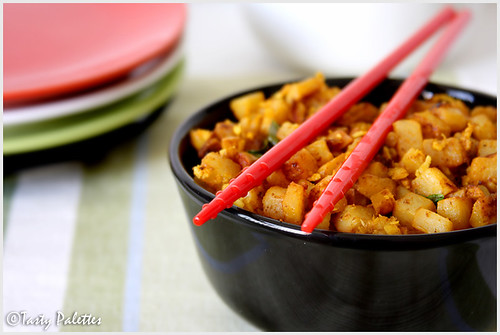
Pavakkai Sadam – Spiced Bittergourd Rice

There are few standard bittergourd recipes that we enjoy year round. Pitlai is a family favourite, followed by oven baked chips. This time G asked for something different. ‘Why don’t you just do a sauté or a simple curry?’, he asked. Very well. The recipe he was mentioning was an old one that my mom makes often. The gourd is cooked and lightly seasoned with mustard seeds, urad dal and chana dal.

When I set to prepare the curry, I thought why not make this into a mixed rice. I haven’t seen bittergourd rice around, so why not extend this curry idea into rice? So I concocted a little spice mixture and prepared this curry. We Loved it (yes, with a capital L). This is definitely a keeper.

One technique that I adopted from the curry is to cook the bittergourd in tamarind water to tame its bitterness. Also, 6 red chillies may sound hot, but it is needed to compensate for the bitterness, along with tamarind and jaggery. Enjoy this slightly bitter and lightly spiced rice with cool raita.

Pavakkai Sadam – Spiced Bittergourd Rice
(serves 2)

Rice – 1 cup
Bittergourd – 8, about 6 inches long
Turmeric powder – 1 tsp, divided
Tamarind paste – 1 tbsp, divided
Mustard seeds – 1 tsp
Curry leaves – a few
Jaggery – 1 to 2 tsp
Salt
Oil

Spice Mixture

Urad dal – 1 tbsp
Bengal gram – 1 tbsp
Coriander seeds – 1 tbsp
Dried red chillies – 6 to 8
Cardamom – 1
Clove – 1
Cinnamon – ½ inch piece

Method

Cook rice with 3 cups of water and ¼ tsp of turmeric powder. Adding turmeric powder gives a golden hue to the finished recipe, which may otherwise be a dull brown. The rice grains should be separate after cooking. Fluff and cool. Cut the bittergourd into half moon rings. If the seeds are very tough and mature, scrape and discard. Otherwise retain the seeds; they add a mild crunch to the rice.

In a wide, deep skillet, roast the ingredients for the spice mixture in a tsp of oil. Cool and grind to a fine powder. In the same skillet, boil bittergourd in 2 cups of water along with salt, turmeric powder and ½ tbsp of tamarind paste. When the gourd has turned soft (but not mushy), drain and discard the liquid.

Return the skillet back to heat. In a tbsp of oil, splutter mustard seeds and roast curry leaves. Add the cooked bittergourd, along with ½ tsp of turmeric powder, jaggery and rest of the tamarind paste. On a medium fire, gently roast the gourd. When they start to caramelize, add the spice powder, rice and salt. Mix thoroughly and heat through. If the rice seem very dry, drizzle a tsp of oil. Check for seasoning and serve hot with raita and chips.

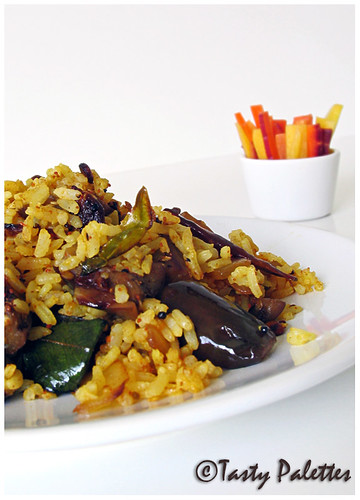
Pavakkai sadam with cucumber+tomato+cilantro raita

Pecan, Squash and Cranberries Speckled Wild Rice

I stumbled upon this recipe one afternoon, by chance. Basmati rice, leftover cranberry-pecan topping from breakfast oatmeal, and some odd vegetables lying in the fridge were thrown together in a skillet. I served it over acorn squash baked in its shell. We absolutely loved the lunch, which was very filling, but took little time to fix. Next time around, I tweaked the recipe a bit. Wild rice mix was used instead of Basmati; the squash was cubed, roasted and added to the mix. I took this to our friend’s place for Thanksgiving dinner and got rave reviews. Best compliment was from their two year old. She just couldn’t get enough of it.

Pecan, Squash and Cranberries Speckled Wild Rice
(serves 2)

Ingredients

Wild rice mix – 1 cup
1 small butternut or acorn squash, peeled and cubed – about 2 cups
Pecan halves – 2/3 cup
Onion or shallot – ½ cup, chopped
Garlic – 1 clove, finely chopped
Carrot – 2, small, sliced at an angle
Celery – 1 or 2 stalks, chopped
Fresh thyme – 1 tbsp, chopped
Dried cranberries – ½ cup
Red pepper flakes – a pinch
Butter and/or oil – 1 tbsp
Salt
Pepper

Method

Cook wild rice either on stovetop or using a pressure cooker. If using a pressure cooker, use 1¼ cups water and cook for 2 whistles. If cooking on stove top, use 2¼ cups of water and cook covered for 45-50 minutes. The rice should be cooked, but firm.

Cook squash by any of the following methods. Steam for 15 minutes. Or boil in water for 10 minutes. You can also roast the squash in a 450F for 20-25 minutes. Roasting is my favourite, as it gives the squash a deeper flavor due to caramelization. It is also the most time consuming method. For convenience, you can roast the squash 2 or 3 days ahead, refrigerate and use when needed.

Meanwhile heat a large, wide skillet over low-medium heat. Gently toast the pecan halves until aromatic. Keep a close watch on the nuts. They go from lightly toasted to burnt in less than a minute. Transfer nuts to the board, cool, chop and reserve.

Crank the flame to medium-high, heat butter and/or oil, and sauté onions and garlic until soft. Add celery, carrot and red pepper flakes, and stir-fry briskly for a couple of minutes. Then add cooked rice, squash, thyme, cranberries and pecans. Season to taste, toss to combine. This rice tastes great whether served warm or at room temperature. I have also noticed that the flavour develops as it sits. So make this ahead, and serve slightly warmed.

This is my entry to Monthly Mingle – Healthy Family Dinners hosted by Michelle of What's Cooking Blog. MM is Meeta's brainchild.

I am pleased to announce that The Daily Tiffin has been nominated for Annual Food Blog awards by The Well Fed Network under Best Food Blog – Group category. We are, expectantly, very excited with the nomination. The DT team brings informative articles on family, kids, health, fitness, etc., month after month. If you have enjoyed your visits there, please help us win by casting your vote here.

Kadamba Sambar/Saadam

‘Kadambam’ in Tamil refers to an assortment of similar things. It more commonly refers to a flower string which is a mixture of flowers like malli, marikozhundu, sampangi, davanam, kanakaambaram. The garland is extremely fragrant and the varying colors are such a treat to the eye. I love wearing this flower garland in my hair, particularly after an oil bath. The damp hair absorbs the scents of the flowers, leaving it fragrant even after two days. Now-a-days, I don’t see women wearing this garland anymore. White jasmine strings are preferred to a more country-esque kadambam. Come to think of it, wearing flowers itself is going out of style. I am an ardent lover of wearing flower strings and I miss it dearly.

Kadamba sambar, a speciality from my native, Thanjavur, is akin to its namesake garland. The vegetables are varied in terms of color, texture, taste and looks, yet aesthetically delightful. The recipe is very similar to arachu vitta sambar, but the vegetables make a difference.

But this is ezhukari kuzhambu, one may say. Yes and no. Yes, because, they both are special kinds of sambar made with more than one vegetable. No, because, ezhukari kuzhambu is never meant to be eaten with rice. Its more of a side dish. Secondly, ezhukari kuzhambu is always made during the winter months, predominantly with winter vegetables and squash. On the other hand, kadamba sambar is made all year around and is always mixed with rice. That’s not much of a difference, you say? Well, that’s up to you. Call it any name you want, its scrumptious.

Vegetables in harmony - Kadamba sambar with a sprinkle of dessicated coconut

This sambar is usually made with ‘naatu karigai’, which is Tamil for country vegetables. So vegetables like cauliflower, green beans, beetroot are off limits. Also, I have used coconut milk which is not conventional. But I would recommend it highly. And, so the ghee. But if you want to make this vegan like I did, you can omit that too. I have also used a handful of dried jackfruit seeds that I collected during summer. They take a long time to cook, about 8-10 whistles in the pressure cooker.

Kadamba Sambar
(serves 2-4, depending on how much you like sambar)

Ingredients

Mixed vegetables – 4-5 cups, cut into 1 inch thin strips
(Flat beans, carrot, plantain, winter melon/white pumpkin, red pumpkin, ladies finger/okra, brinjal, drumstick, peas, Indian lima beans, elephant yam, sweet potato, any kind of greens, etc)
Tamarind paste – 3 tbsp
Tomato – 1, chopped
Turmeric powder – 1 tsp
Coconut milk – ¼ cup (optional)
Toor dal – ½ cup, pressure cooked till soft
Asafoetida – a pinch/ or a little amount dissolved in hot water, if using blocks
Cilantro – 2 tbsp, chopped
Salt

Spice mixture

Chana dal – 2 tbsp
Coriander seeds – 1 tbsp
Urad dal – 1 tsp
Red chillies – 6
Fenugreek seeds – 1 tsp
Grated coconut – ¼ cup
Oil – 1 tbsp

Roast chana dal through fenugreek seeds in oil. Cool and grind along with coconut to a smooth paste.

Seasoning

Oil/ghee – 1 tbsp
Mustard seeds – 1 tsp
Curry leaves - few

Method

Dissolve tamarind paste in 1 cup of water. In a deep vessel, boil tamarind water along with salt, turmeric powder, tomato and mixed vegetables for about 15 minutes. The vegetable should be fully cooked and the tamarind shouldn’t smell raw anymore.

Add the cooked dal and spice paste and allow sambar to boil for 5 minutes. Stir occasionally. Finally add the coconut milk, if using and switch off the flame. Mix well and let the coconut milk to heat through. Stir in asafoetida and cilantro.

In a small skillet, heat oil/ghee and splutter mustard seeds. Remove from flame and add curry leaves. Add this seasoning to the sambar. Serve this sambar with rice and additional ghee, if preferred.

Mix generous ladles of sambar into rice (called saadam in Tamil), mix well and serve warm ‘Kadamba Saadam’ with crunchy cucumber slices, vegetable chips or appalam. The rice should not be dry, but porridge like consistency.

If you want to include onions, slice ‘em thin and sauté with mustard seeds while seasoning and add to the sambar. Omit asafoetida though, as it doesn’t go well with onions or garlic.

Steaming hot kadamba sadam, specked with jackfruit seed - comfort in a bowl

This is my entry to Rice Mela, hosted by uber-energetic Srivalli. This is also my fourth and last entry to Vegan Ventures, round 2, which runs till the end of this month. See you all next week. Have a great time with your family.

Kadamba sambar on other blogs:
Live 2 Cook
The 'yum' blog
The Colour Purple

Purple Kale

I asked What Could That Be? And, most of you answered it correctly. Its purple kale. For those who are not familiar with kale, it belongs to the same family as the green kale. The difference is, green kale grows as stalks, while the purple variety grow as heads, hence the name ‘flowering kale’. Some species of purple kale are also used as for ornamental purposes, but may not be edible. While I was editing the photo, it looked more like a coral than a green. Guess it was just me, because so many of you guessed it right. But now, if I squint my eyes, it looks like Tina Turner’s wig, Bee ;).

Purple kale is not regularly available in our neighborhood stores. When I found it in the local market, I jumped with joy. As usual, I had no idea what this would taste like. But the colour purple was too enticing. But I was in for a surprise, whilst I cooked it. Green kale is very tough, chewy and doesn’t have a signature aroma. If not cooked properly, it tastes more like an old shoe. On the other hand, purple kale was very aromatic and tender. Even while I was sautéing, I started munching from the pan, which I normally don’t do with green kale until it is thoroughly cooked.

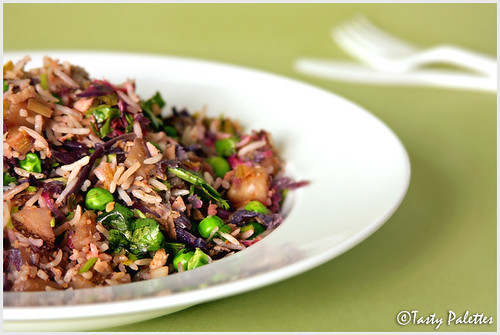
I decided to pair this aromatic green with equally fragrant Basmati rice. The purple from the kale stained the rice, giving the pulao a mellow mauve color. I kept the spices to a minimum, letting kale take all the attention. I sautéed the whole head, used half in pulao and made enchiladas with the other. In both the dishes, I was thoroughly impressed with purple kale. If you get a chance to lay hand on this beauty, don’t miss.

Purple Kale Pulao

Purple Kale Pulao

Basmati rice – 1 cup
Purple kale – ½ head
Red onion – 1, sliced
Frozen green peas – ½ cup,
Potato – 1, cubed
Grated coconut – 2 tbsp
Ginger – 1 inch, minced
Garlic – 2 cloves, minced
Green chilli – 2, slit
Red pepper flakes – 1 tsp
Cilantro
Oil – 1 tbsp
Salt

Tempering

Oil – 1 tbsp
Cumin seeds – 1 tsp
Fennel seeds – ½ tsp
Cinnamon – 1 inch
Cloves – 2
Cardamom – 2
Bay leaf – 1
Star Anise – 1

Method

Cook basmati rice with 1 to 1¼ cup of water. Fluff and cool till the grains are separate. Heat a tbsp of oil and sauté kale till its soft. Remove and set aside.

In the same pan, heat another tbsp of oil and add spices for tempering given in the above said order. When the spices get slightly toasty, add onion, garlic, ginger, green chillies and potato. Sauté until onions and potatoes are soft. Now add the kale back, along with red pepper flakes, green peas, coconut and salt. Mix well and add rice. Gently mix the pulao and heat through. Check for seasoning and garnish with cilantro. Serve with raita of your choice.

Turnip

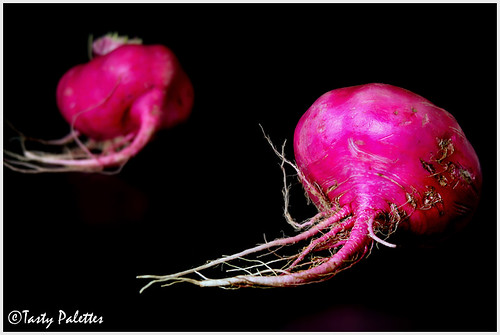
Talking about the colour purple, I also came across these beauties in our local market - Purple Turnips. The woman next to me said ‘They look like giant radishes’. I smiled to myself. Well, they do belong to the same family.

Turnip Sauté

Turnips, known as ‘Nool Kol’ in Tamil and ‘Shalgam’ in Hindi, is well-known for its bitterness. I would say its texture is like that of a firm, but bitter white pumpkin. To overcome its bitterness, I boil it once in water, drain and boil again. But it still retains its bitterness to a certain extent. So, now-a-days, I cook turnip in tamarind water, drain and use it in any recipe. This way, it never tastes bitter.

This is how I served these purple beauties. I boiled the peeled, cubed turnip pieces in tamarind water; drained and sautéed them with salt and sambar powder; finished with a tbsp of grated coconut. We loved it.

Turnip Saute

I know any purple lover, including me, cannot help, but fall for both these purple beauties. Nature has a unique of expressing herself.

Saffron Rice And Punjabi Okra

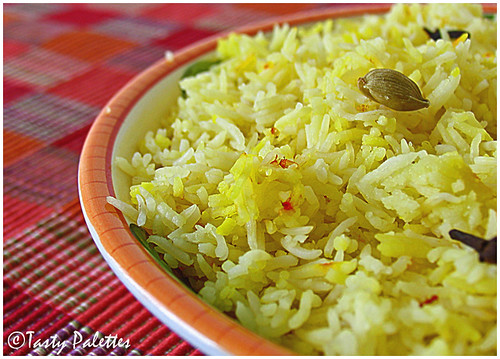
Whenever I make a rich curry or masala, I prefer to serve it with a milder tasting rice. But making peas or jeera pulao over and over pushed me to look for other options. I landed making saffron rice, and needless to say, instantly took a liking toward it. After all, what is there not to like about saffron and the aromatic basmati rice? Sunita, this is my humble entry for Think Spice – Saffron.

Saffron Rice

Saffron Rice

Ingredients

Basmati rice – 1 cup
Water – 1½ cups
Saffron – 2 pinches
Cloves – 2
Cardamom – 2, slightly crushed
Salt – ¾ tsp

Method

Mix all of the above and pressure cook until 2 whistles. Fluff and serve.

Punjabi Okra

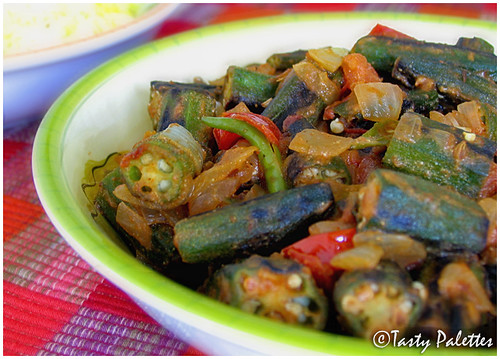
When I see okra, I can only think of it in sambar, pan fried with spices or stuffed. But when they are abundant, I venture into untrodden paths. This curry may sound simple, but the tangy yogurt and sweet okra are a good duo.

Punjabi Okra

Ingredients

Okra or ladies finger – 2 cups, chopped into 2 inch pieces
Onion – 1, sliced
Tomato – 2, chopped
Garlic – 2 cloves, minced
Green chillies – 2, slit
Cumin seeds – ½ tsp
Garam masala – ½ tsp
Red chilli powder – ¼ tsp
Coriander powder – ½ tsp
Turmeric – ¼ tsp
Yogurt – ¼ cup
Salt
Oil

Method

Heat oil, and toast cumin seeds. Add onions, green chillies and garlic and sauté until onions turn soft. Add tomatoes and sauté for another minute. Add okra, coriander powder, turmeric, red chilli powder and salt. Mix well, sprinkle water, cover and cook until okra is done. Sprinkle garam masala and add yogurt. Combine well and heat through.

Curried Eggplant Rice

When I am uncertain about what to cook for lunch, I bank on mixed rice. Scour your refrigerator for any vegetable, sauté them with appropriate spices, mix with rice and serve with raita and chips. Lunch is taken care of. This is one such recipe I came up with and liked so much, that it goes to my cooking repertoire.

Ingredients

Basmati rice – 1 cup
Indian eggplant – 6 or 7
Onion – 1, chopped
Mustard seeds – ½ tsp
Chana dal – 1 tbsp
Urad dal – 1 tbsp
Curry leaves
Red chillies – 2, broken
Turmeric powder – ¼ tsp
MTR Curry powder or a combination of garam masala, coriander powder and cumin powder – 2 tsp
Salt
Oil

Method

Cook rice in a pressure cooker or on stove top and cool separating each grain.

In a skillet, heat oil, splutter mustard seeds, and add chana dal, urad dal and red chillies. After dal gets brown, add curry leaves, onion and turmeric powder. Let onions turn soft and add chopped eggplants, salt, curry powder. Sauté until eggplant is cooked and roasted well. Mix the cooled rice and adjust seasoning as required. Serve with vegetable salad or raita.

Curried Eggplant Rice

Eggplant rice served with rainbow carrots that I picked from the local farmer’s market.

Wild Rice Pulao

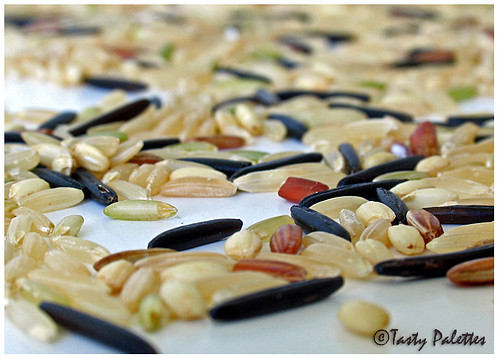
Wild Rice Medley

Wild rice has a signature flavour. It is nutty and pleasantly chewy when not overcooked. It is surprising to know that it is not actually a rice variety, rather the seed of a grass. It has more protein than white or brown rice and expensive too. Added to this, it takes longer to chew and hence the portion size is always smaller. They are great in salads too. More about wild rice here.

I have previously purchased wild rice in smaller quantities and was greatly impressed with its taste and texture. But when I wanted to make this for Nupur’s W of A-Z Indian Vegetables, I couldn’t find them. So I am using an organic rice medley which consists of wild rice, brown rice, sweet brown rice and heirloom red rice from Costco. I think this is the great way to start getting acquainted to both wild rice and brown rice, if you haven’t tried them yet.

Ingredients

Wild rice - 1 cup
Cumin seeds – 1 tsp
Fennel seeds – ½ tsp
Cinnamon – 1 inch
Bay leaf - 1
Onion – 1, medium sized
Green chillies – 2
Garlic – 2 cloves
Ginger – 4 inch piece, cut into big pieces
Mint – ¼ cup, finely chopped
Cilantro – ¼ cup, finely chopped
Oil
Salt

Method

Cook wild rice either in a sauce pan or pressure cooker. If cooking in a pan, boil 2 cups of water, add ¼ tsp of salt, rice and ginger. Reduce the heat to simmer, close the pan and cook for 30 minutes until done. After 25 minutes check for doneness, and add ½ cup of water if needed. If cooking using a pressure cooker, take 2 cups of water for 1 cup of rice and wait for 3 whistles. Allow to cool and fluff the rice with a fork. Adjust the rice-water ratio according to the hardness of your tap water. I cook white rice in 2:1 rice-water ratio due to the hardness of our water. Remove the ginger pieces from the rice.

In a skillet, heat oil, and splutter cumin and fennel seeds. Also add cinnamon and bay leaf and allow them to brown. Add onion, green chillies and garlic to the skillet and cook till onion turns translucent. Add mint and cilantro, stir well and add wild rice. Mix well, check for seasoning. This pulao pairs well with any vegetable gravy and raita or yogurt based gravy.

Wild Rice Pulao

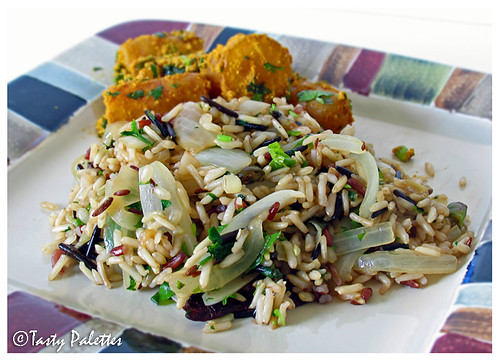
Wild rice pulao and potatoes in yogurt sauce.

Check out how Indira serves her wild rice.

Tomato Rice

Love Apples - Well that could be a mistranslation, but nevertheless I am in love with these apples. This fruit (actually a berry), raw or cooked has a sweet and acidic flavour and is available in all size, shapes and colours.

When I picked these vine-ripened beauties (actually, lots of ‘em) and after making sauce and soup, I decided to make pulao with the leftovers. There are umpteen number of recipes for tomato pulao/rice in the web; so why add another? Well, I think each cook has their own style of cooking, bringing their signature flavour to the dish with subtle changes. Though the ingredients list is long, it is the combination of these spices and the ease of preparation that appeals to me. Feel free to vary the combination of the spices.

IMG0015

Clockwise from cilantro: cilantro, cashews, bay leaf, star anise, cumin, urad dal, chana dal, fennel, black pepper, cinnamon, cloves, cardamom, peas, onion, ginger, garlic

Ingredients

Basmati rice – 1 cup
Tomato – 3 big ones
Onion – ½ or 1 small
Peas – ½ cup
Ginger – 1 inch piece
Garlic – 3 cloves
Tomato paste – 2 tbsp (optional)
Chilli powder - 1 tsp
Turmeric powder – ¼ tsp
Cilantro or coriander leaves
Salt
Oil – 2 tbsp

Seasoning

Mustard seeds – ½ tsp
Chana dal -1 tsp
Urad dal – 1 tsp
Black pepper – 8 to 10
Cumin seeds – ½ tsp
Fennel seeds– ¼ tsp
Star anise - 1
Cardamom - 1
Cloves - 2
Bay leaf - 1
Cinnamon – 1 inch
Cashews - few

Method

Wash and soak the rice for 20 minutes and cook in 1¼ cups of water. Fluff the rice and allow it to cool.

In a kadai, add oil and splutter mustard seeds. Then add the other seasonings one by one. When the cashews turn golden brown, add onions, ginger, and garlic. Let onion cook for a minute and add tomatoes, peas, turmeric powder, chilli powder and salt. I also add tomato paste to give it a deep tomato-ey flavour. When the tomatoes are done, mix the cooked rice thoroughly and garnish with cilantro. The rice develops flavour as it sits, so this is an ideal dish for potlucks.

IMG0008

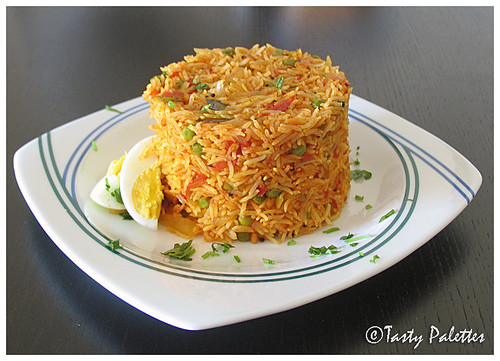
Tomato rice and hard-boiled eggs